


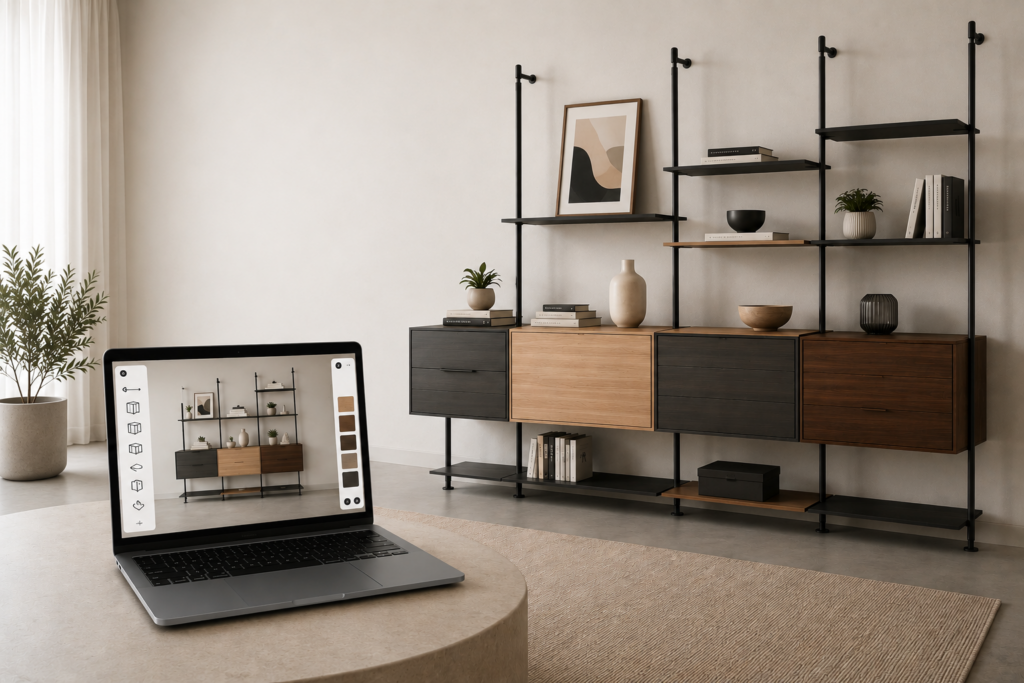
The furniture industry is undergoing one of its most significant transformations in recent years. For decades, a product’s success depended primarily on its design, manufacturing quality, and a company’s sales network. Today, however, as online furniture sales continue to grow and furniture e-commerce websites become a primary point of contact with customers, market expectations are rapidly evolving.
Today’s consumers are looking for more than just a beautifully designed product. They expect a complete buying experience that helps them better understand their options, compare different solutions, and feel more confident before making a purchase or requesting a quote.
Digital Presence Becomes a Key Competitive Advantage
In the past, visiting a showroom was almost always the first step in the furniture buying journey. Today, that journey begins much earlier. Customers research online, browse furniture company websites, compare products, and explore different solutions long before they ever speak with a sales representative.
This means that a company’s digital presence has become a strategic asset. A modern furniture e-commerce website is no longer just an online product catalog—it serves as the first digital showroom and plays a direct role in influencing customers’ purchasing decisions.
Companies that invest in effective furniture product presentation gain a significant competitive advantage in an increasingly competitive market.
Customers Expect More Than Photos
Displaying photos and technical specifications alone is no longer enough for many furniture products. This is especially true for custom-made furniture, kitchens, wardrobes, and modular furnishing systems, where customers want to explore multiple options before making their final decision.
They want to explore different materials, colors, and configurations. They want to better understand dimensions and visualize how a product will fit into their own living space.
For this reason, an increasing number of furniture companies are investing in advanced product presentation technologies, digital showrooms, and 3D furniture visualization solutions that deliver a richer and more immersive customer experience.
The Role of Furniture Configurators in the Furniture Industry
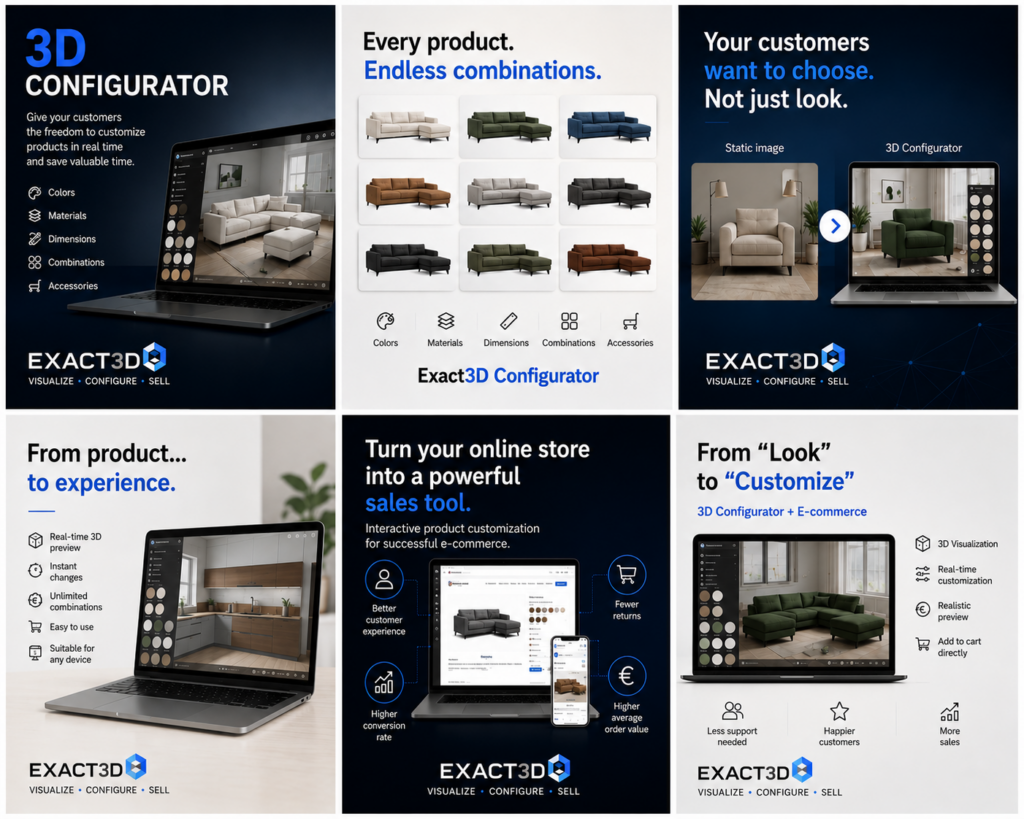
One of the technologies gaining significant traction is the furniture configurator. While it was once a tool used primarily by large international manufacturers, it is now being adopted by an increasing number of companies looking to elevate the online customer experience.
The ability to customize products within a digital environment allows customers to take an active role in the decision-making process. At the same time, it enables businesses to showcase their products more effectively while reducing the uncertainty that often accompanies online furniture purchases.
It is no coincidence that many furniture companies now combine their e-commerce platforms with product configurators, digital showrooms, and advanced product visualization solutions to deliver a more engaging and seamless customer experience.
The Digital Showroom Is the New Reality
The term digital showroom is becoming increasingly common in the furniture industry. It refers to an approach that enables businesses to present their products in a more engaging, interactive, and intuitive way, making it easier for customers to explore, understand, and evaluate their options.
Whether it’s a living room furniture collection, a kitchen design, or a custom-made solution, the ability to present products digitally significantly enhances the customer experience and supports more confident purchasing decisions.
As consumers spend more time researching products online, the digital showroom is becoming one of the most important sales tools for companies in the furniture industry.
From Furniture Design to Customer Experience
Design remains, of course, a fundamental driver of success. However, the market is increasingly showing that competitive advantage no longer comes exclusively from furniture design or manufacturing quality.
The businesses that stand out are those that successfully combine product, technology, and customer experience into a unified strategy.
Effective product presentation, the use of advanced visualization tools, product customization capabilities, and the overall customer experience have become key differentiators in today’s furniture market.
The Future of the Furniture Industry
The furniture industry is entering a new era in which technology is playing an increasingly important role in the sales process. Online furniture sales, next-generation e-commerce platforms, digital showrooms, and product configurators are no longer just emerging trends—they are part of a broader transformation that is reshaping the industry.
Businesses that invest early in enhancing the digital customer experience will be the ones that gain the greatest competitive advantage in the years ahead.
The future of furniture goes beyond product design. It lies in the way products are presented, experienced, and perceived—transforming every interaction into a complete customer journey.